
I have been, or can be if you click on a link and make a purchase, compensated via a cash payment, gift, or something else of value for writing this post. As an Amazon Associate, I earn from qualifying purchases. Please read my full Affiliate Disclosure for more information.
Choosing the right rug. Sounds simple, right? Like picking out a new pair of work boots. But it turns out, it’s a whole lot more involved than just grabbing the first one that doesn’t clash with your couch. We’re talking about your room’s size and traffic, because apparently, rugs have feelings about being squished or constantly trampled. You’ve gotta measure carefully, like you’re planning a DIY plumbing job, making sure to account for doorways and all the furniture you’ve crammed in there. The goal is to get a rug that anchors seating while still letting you walk through the room without tripping over your own feet, or worse, the rug itself.
Then there are the fibers. Pick ones that fit your lifestyle. If you’ve got a herd of kids or a dog that thinks the living room is a wrestling arena, you’ll want durable wool or some of those synthetic blends. They’re like the trusty steel-toed boots of the rug world. If you’re going for luxury, maybe silk or some fancy blends. Just be prepared to treat it like a delicate piece of electronics. After all that, you coordinate colors and patterns. The idea is to unify all the textiles in the room, so it doesn’t look like a yard sale exploded. Place the rug so the front legs of your furniture are on it. It’s like setting up a strong foundation for your house, keeping things steady. Keep at it, and you’ll figure out how to make your room feel balanced and harmonious. Who knew rugs were so demanding?
Key Takeaways
- Start with room measurements, doorways, and traffic flow. This helps you get the right rug size and placement for smooth navigation, avoiding those awkward rug-bunched-up moments.
- Choose fibers based on your life. Wool is tough, like a good truck. Synthetics resist stains, which is handy if you’re prone to spilling your morning coffee. Silk is for the fancy folks, just know it requires a bit more pampering.
- Line up rug edges with your seating. Get those front legs on the rug to keep everything grounded. It’s like ensuring your bar stool is fully under the counter, not half in the aisle.
- Use color and pattern to bring all your fabrics together. Lighter tones near the doorway, heavier ones under the main seating. It’s about visual weight distribution, like balancing a heavy toolbox on one side of your truck.
- Plan your margins and spacing. You want clear sightlines and pathways. No one wants to feel like they’re navigating an obstacle course in their own living room.
Rug Size Guide: How to Choose Proportions for Your Space
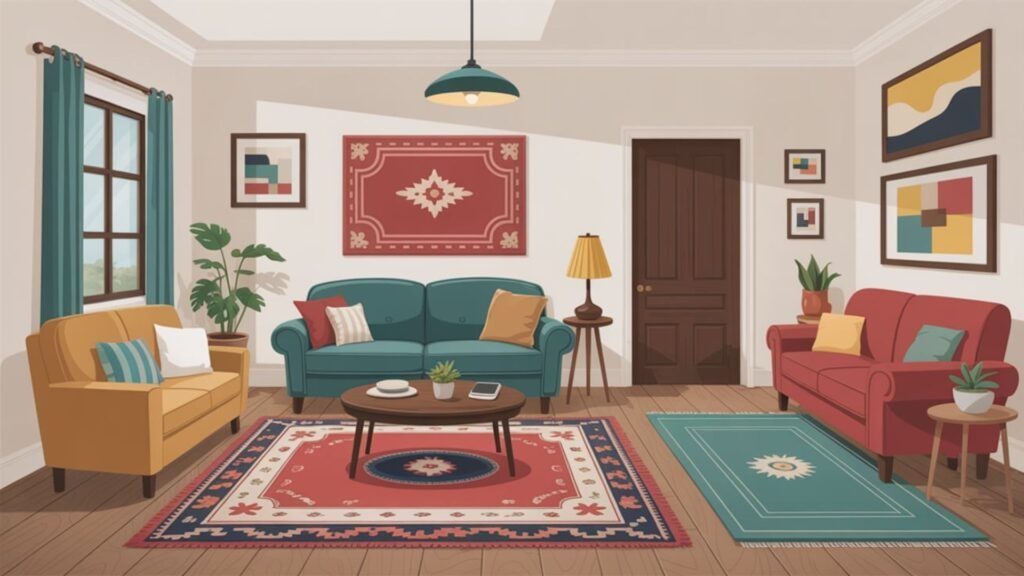
Picking the right rug size really kicks off with understanding your space. What do you want it to feel like? Are we going for “open prairie” or “cozy cave”? You’ll need to measure everything, like checking the clearances for a new appliance delivery. Note where your doorways are, how much space your furniture hogs, and how people typically move through the room. An oversized rug can make a room feel substantial, like a big, sturdy workbench. A smaller one keeps pathways clear, good for those quick trips to the fridge during a commercial break.
Try to get at least one seating area to sit nicely on the rug’s edges. Bigger rooms can handle rugs that stretch beyond the furniture legs. That makes everything feel more connected, not like a bunch of separate islands floating around. Color coordination helps tie all your fabrics together. It prevents your room from looking like a mismatched set of wrenches. Pattern mixing adds some spark without turning into a chaotic mess. Plan proportions so your rugs aren’t too much, like a monster truck in a compact car garage, or too little, like a postage stamp on a billboard. With some thought, you’ll create balance, clarity, and a welcoming, put-together vibe. It’s all about making your space work, not just exist.
Materials and Lifestyle: Picking the Right Rug Fiber
The material of your rug can totally make or break how it performs. It’s like picking the right tool for the job. You’ve gotta pick fibers that match your lifestyle and how much cleaning you’re willing to do. When you think about fiber, consider its durability, how it feels underfoot, and its stain resistance. This should all be weighed against how often you actually get around to vacuuming or cleaning up spills. Silk might look shiny and fancy, but it needs to be babied, like a finicky old car. Wool is a good all-rounder, tough and warm, but it’s a magnet for pet hair and pollen, like a lint roller for your floor.
Synthetic blends are often a smart choice for the wallet and good at shrugging off stains. They’re perfect for high-traffic zones, like a busy entryway or a kid’s play area. If you’re into being green, look for sustainable fibers that are sourced responsibly. Compare how long different carpets typically last. Remember those crucial maintenance tips: vacuum up dry dirt before it grinds in, blot spills immediately (don’t rub!), and rotate your rug now and then. Matching the fiber to your daily grind means you’ll have lasting harmony, an easier life, and cleaner air under your feet. It’s about finding that sweet spot between looking good and not being a total pain.
Placement Techniques: Creating Balance From Entry to Seating
So you’ve got your fiber-smart rug. Now, how you place it can totally change the flow of a room. It impacts the balance and how easy it is to actually use your space, from the moment you walk in the door to when you finally kick back on the couch. Start by making a clear path. Position the rug so that people naturally move towards the main areas without bumping into furniture. It’s like directing traffic, but without the orange cones.
Use the rug size to anchor your seating. Make sure the front legs of your sofa or chairs are on the carpet. This creates a cohesive look, like all your tools being neatly arranged on the workbench. Think about making certain spots a focal point. Place key furniture where the rug’s pattern or color draws the eye. Just don’t let the rug totally steal the show. Consider how you distribute visual weight. Lighter colors near the door, heavier ones under the main seating. This keeps everything in equilibrium, like a perfectly balanced load in the back of a pickup. Test out your spacing, tweak the margins, and keep those sightlines clear so everyone can navigate comfortably. Nobody wants to feel like they’re in a maze.
Conclusion
Choosing the right rug really does bring a room together. It’s like the final piece of the puzzle that makes everything click. So, start with proportions that just feel right to you. Measure those critical zones, aim for balanced gaps, and let the rug gently guide people through the room without overcrowding the furniture. It’s about making your space work for you, not the other way around.
Match the fibers to your lifestyle. Need something tough for the kids or pets? Go for durable blends. Craving some softness underfoot? Plush it is. Place that rug thoughtfully. Anchor your seating, define different areas, and create a sense of harmony from the front door all the way to your favorite lounging spot. With a little careful selection, your space will look cohesive, inviting, and effortlessly polished. It’ll be the kind of room that just makes sense.
Leave a Reply