I have been, or can be if you click on a link and make a purchase, compensated via a cash payment, gift, or something else of value for writing this post. As an Amazon Associate, I earn from qualifying purchases. Please read my full Affiliate Disclosure for more information.
You want to make your kitchen feel like a proper home, not just a place where you microwave leftovers. Get this: choosing the right art can actually guide your movements, kind of like a really good GPS for your culinary adventures. Then, you’ll want to layer textiles to define zones and soften those hard edges, making the space more inviting.
A consistent color rhythm and varied frame sizes will anchor your daily tasks, preventing that “where did I put the spatula?” panic. Also, vintage posters or botanical prints are like little visual nudges, reminding you it’s time for that morning coffee or evening meal. Warm accents, things like woven baskets, tactile surfaces, and personal keepsakes, keep everything looking neat but still welcoming. We’ve got more strategies coming your way to balance those bold statements with a cohesive palette and a kitchen that just works.
Key Takeaways
- Pick artwork that moves with the flow of your kitchen traffic, using its size and story to grab attention without turning your counters into an obstacle course.
- Layer up those textiles to mark out different areas, bounce some light around, and bring all the colors of your kitchen together in a cozy way.
- Use a gallery wall to keep your routines on track. Think recipes, timers, grocery lists. Mix up the frames and label things clearly to help you stay organized.
- Throw in some warm accents and textures. Baskets, metals, throws. These things make your workspace inviting without making it look like a hoarders’ paradise.
- Showcase personal bits and pieces. Family photos or old recipe cards. These can spark conversations and make meal prep feel a little more special.
Choosing Artwork That Sparks Joy in the Kitchen
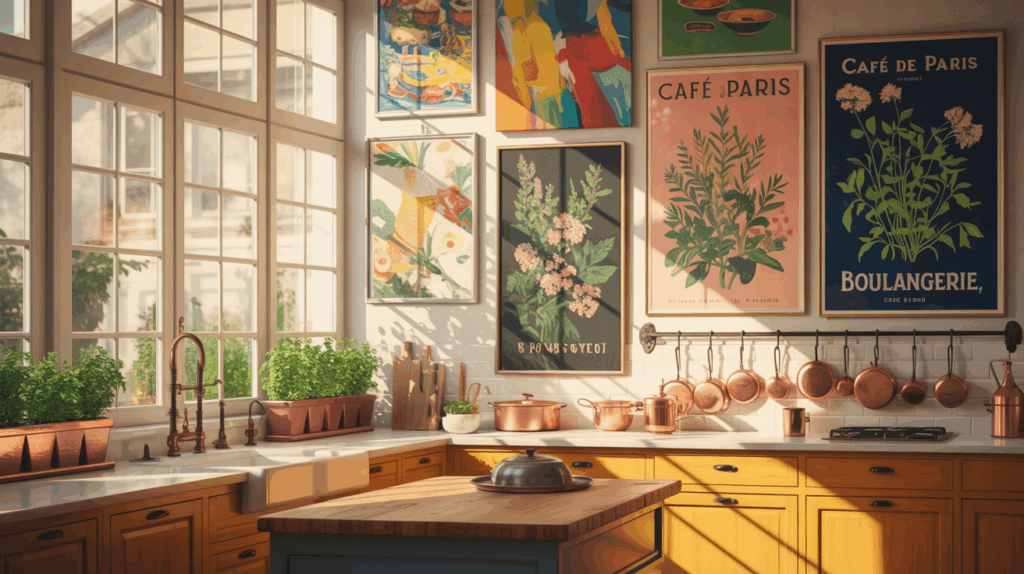
Finding artwork that makes you happy in the kitchen starts with a simple question: How do you actually use this space? You need to pick pieces that fit with how you move and even how you breathe while cooking. You’ll measure how a picture directs foot traffic, where your eye naturally lands, and if it helps with the flow of your tasks. Consider the size of the artwork. Nobody wants a giant painting making your counter space feel smaller than a postage stamp. Either go big with one piece or try a small set of three.
Vintage posters give you that crisp look and a dose of nostalgia, while botanical prints bring in a calm, fresh vibe, like a breath of fresh air after a long day. Balance the colors with your cabinets and the lighting. Make sure those work surfaces stay practical. Focus on where the art came from, how it’s framed, and if you can actually see it without craning your neck. Your choices should feel effortless, intentional, and something you can actually enjoy while whipping up dinner.
Color and Texture: Textiles That Tie the Space Together
Layering textiles is like the secret sauce for your kitchen’s color scheme and overall feel. It weaves in color and texture, making the daily grind of cooking and gathering a little more pleasant. You’ll see how things like ceramic dishware and woven textiles magically define different areas, soften those harsh corners, and reflect light from your windows and lamps. Pick fabrics with subtle patterns and balanced sizes so your kitchen doesn’t look like a fabric store exploded in there. Then, layer up different thicknesses. Think linen napkins to chunky wool throws, adding some real tactile variation.
Keep the colors consistent across all your textiles to really cement the room’s mood. You can add little personal touches, like contrast stitching or piping, that make it feel like your kitchen. Precision here really matters: texture helps things flow, while textiles frame function. It’s all about making those everyday tasks feel a bit more special, a bit more crafted.
Gallery Wall Ideas for a Functional Cooking Zone
A gallery wall in your cooking zone isn’t just for looking pretty. It’s there to direct you, motivate you, and keep your daily tasks on track. You’ll want to plan its placement so it helps your workflow, balancing visual appeal with actual usefulness. Think deliberate spacing and scale. Use an art installation and some vintage posters to cue your routines. Recipes right where you need them when you’re standing still, timers near the stove, grocery reminders by the fridge. This way, your focus shifts without any jarring interruptions. Keep it all cohesive with a consistent color scheme and frames that make it look like one big, awesome piece.
- Group things strategically by task, like keeping all your baking-related art together.
- Use different sized frames to create a nice visual rhythm, like a good beat to your cooking.
- Clear labels mean you can find what you need in a flash.
Decorative Accents That Warm the Workspace
You can warm up your workspace by layering textures that just beg to be touched, from those rustic woven baskets to sleek brushed-metal surfaces. Let colorful focal accents draw your eye and anchor your cooking area without cluttering it up. Maintain clean, airy sightlines so it doesn’t feel cramped. Personal touches, like photos, keepsakes, or even old recipe cards, add that special meaning and lived-in vibe. It feels both cozy and polished, like your favorite worn-in denim jacket.
Warmth Through Textures
Texture brings serious warmth to a kitchen without you having to knock down any walls. So, pick decorative accents that feel tactile and inviting. You’ll notice how texture makes a space feel tighter but still breathable, kind of like a perfectly fitted shirt. It guides your eye and your focus towards those daily rituals. To really crank up the warmth, choose materials with depth and subtle variations. These invite you to touch them and linger a little longer. Build a cohesive mood with tactile surfaces, fabrics, and materials that speak to the season, all without making your sightlines feel like a crowded freeway. It’s like magic, but with fabric.
- Seasonal decor accents add a dash of coziness, like a warm hug for your kitchen.
- Tactile textiles and linens bring comfort, making every touch a little more pleasant.
- Lighting enhancements sculpt the space, making it feel more intentional and less like a fluorescent office.
This approach keeps your workspace clear, refined, and instantly yours.
Colorful Focal Accents
Ready for this? Colorful focal accents are like hitting the “boost” button for your kitchen. They instantly draw your eye to intentional hotspots without making the room feel like a kid’s ball pit. You pick energetic colors and purposeful placements to guide movement, not to overwhelm every flat surface. Think about how artwork framing can actually complement your cabinetry while keeping those open sightlines. This makes every piece feel intentional, not just random decoration. Use color psychology to calm things down in your prep zones and add some zest near the dining nook. Balance the temperature, saturation, and contrast. Pick a cohesive palette, then add accents, like vases, textiles, or small sculptures, that echo that overall theme. Precision placement really matters. Don’t overload the walls. Curate it like a fancy art gallery, with thoughtful restraint. You don’t want your kitchen to look like a digital ad with too many pop-ups.
Personal Narrative Pieces
Personal narrative pieces are like storytellers for your kitchen. They add warmth by turning surfaces into memory-rich accents instead of just plain old decorations. You’ll curate moments that speak softly, not shout, blending cultural symbolism with your daily routines. Let your space be a reminder of gatherings, cherished recipes, and your family’s values. All while staying organized and intentional. Consider how objects tell your story without creating visual noise.
- Carefully selected pieces can weave in cultural symbolism, making your kitchen uniquely yours.
- Display vintage collections in a balanced, easy-to-see way, so they enhance, not detract.
- Place tactile artifacts where they can be touched, seen, and serve a purpose.
This approach respects your space, guides your choices, and creates a cohesive, understandable story that you get to live in every single day.
Personal Prints and Meaningful Motifs for Everyday Meals
When you pick out personal prints and meaningful motifs for your everyday meals, you are essentially building a kitchen that feels both intentional and welcoming. These visuals are like little secret notes, constantly reminding you of what’s important, subtly guiding your mood while you cook. You’ll curate with purpose, making sure the size and lighting work together to help you focus and keep things flowing. Select culinary art displays that echo your routines, whether it’s recipes, special moments, or key ingredients. Every glance will reinforce comfort and care. Think about kitchen feng shui cues and spacing to avoid clutter. The end result is a refined backdrop that makes your kitchen more functional, more inspiring, and sparks more conversation. It elevates daily dining without being a distraction from the deliciousness you’ve created.
Balancing Bold Statements With Cohesive Palettes
Mixing bold statements with a cohesive palette is like conducting an orchestra. It starts with a clear idea: the space should feel intentional, not like a garage sale exploded in there. You direct this balance by anchoring the room with a dominant color, then layering accents that pick up on that main hue. Think about how your furniture arrangements guide the flow of the room, making sure you can still see your amazing artwork without bumping into a chair. Lighting enhancements are crucial here. They highlight your focal pieces without washing out the color, preserving all that depth and mood. It’s like a spotlight on your favorite band member, without blinding the audience.
- Pick a main color, the star of the show.
- Echo those accents in different textures and finishes, giving it a harmonious feel.
- Make sure everything is proportionally aligned, like a well-dressed crew.
This approach keeps those bold statements in check, so you get polish, precision, and effortless cohesion everywhere you turn. It’s like your kitchen is running on autopilot, but in a good way.
Practical Tips for Maintaining a Stylish,-Yet-Useful Kitchen
Keeping a kitchen stylish and useful really boils down to smart systems and those little tactile details. You want to prioritize workflows that actually fit how you cook, how you store things, and how you clean. Then, layer in durable finishes and carefully chosen decor that won’t get in the way of what your kitchen is actually for. To make things super efficient, focus on kitchen organization that makes prep and cleanup a breeze. Keep your most-used tools within easy reach and label everything so you’re not digging around like an archaeologist. Think about upgrading your appliances. They can save you time and energy without adding to the clutter. Keep a visual calm with consistent materials. Regularly check your layout as you cook more. This ensures your space stays responsive, ergonomic, and easy to maintain, just like a well-tuned engine.
Conclusion
In your kitchen, every single item serves a purpose. It’s not just there to look good. You curate with real intention, balancing bold statements with cohesive palettes. This makes movement feel effortless and keeps your meals practical. Let your artwork spark joy, let those textures bring warmth, and let accents invite you to your daily routines. All without crowding your precious counter space. Prioritize lighting, scale, and the overall flow. Then, update things gradually as your routine evolves. You’ll end up with a stylish, functional zone where the decor actually helps you cook, share, and enjoy those everyday moments with quiet confidence. It’s like a well-oiled machine, but with more snacks.
Leave a Reply